
.png)
.png)
Reviews for Ryoko Media
Projects
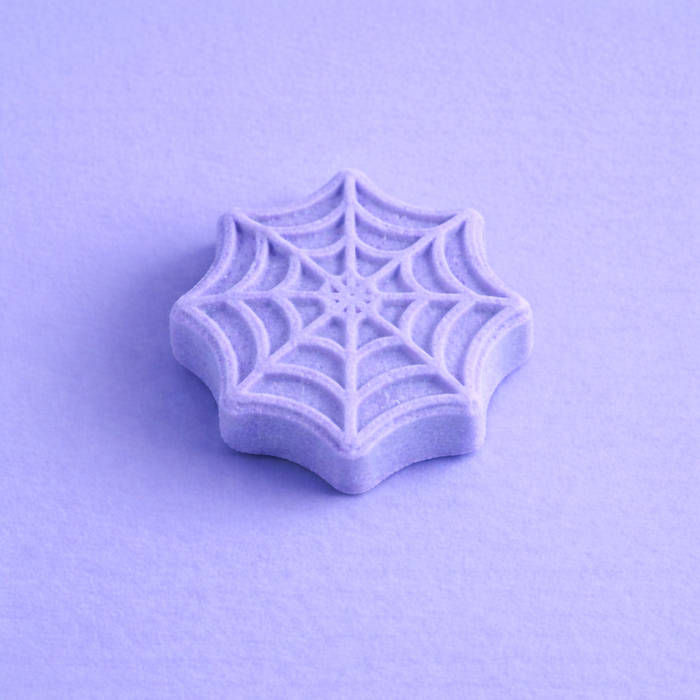
Few collaborative projects in contemporary independent hip-hop have generated as much intrigue as Inpatient, the transatlantic partnership between Ren and Chris Webby. With each release, the duo has demonstrated a willingness to experiment beyond the confines of traditional rap, blending theatrical storytelling, psychological introspection, and genre-bending production. Their latest single, “Tarantula,” continues that trend, delivering a dark, venomous burst of energy that stands among the most intense entries in the project’s growing catalogue. Released on June 3, 2026, the track also features production from JP On Da Track and forms part of the upcoming Asylum project.
From its opening moments, “Tarantula” establishes an atmosphere of enticing unease, an uncanny combination. The production is dense and cinematic, balancing heavy and punchy percussion, ominous bass lines, and electronic textures that feel as though they are constantly closing in on the listener. There is an unmistakable sense of menace embedded within the instrumental which lends itself to the song’s themes of inner turmoil, fractured identity, and controlled chaos. Ren then opens the track with a verse that immediately grounds the song in personal experience. References to chronic illness, medication, and psychological strain lend authenticity to the performance, while his trademark wordplay transforms deeply personal struggles into compelling imagery. “A cannula from my wrist, sick material” is the most striking line for me as it suggest that Ren’s continued history of chronic illness has become a vital part of his creative output, so much so that it has been injected into his veins, similar to a cannula. The line between reality and metaphor quickly blurs, with the titular tarantula emerging as both a symbol of threat and a representation of the darker aspects of the self. Accompanying these more sinister themes alongside a reggae-style instrumental backing adds but another juxtaposition, further manipulating the listener’s subconscious due to the primarily up-beat and positive vibes that are paramount to the Reggae genre.
Chris Webby’s contribution injects a different kind of intensity. His verse embraces the spider metaphor with comic-book bravado and rap-battle aggression, weaving references to Peter Parker, The Punisher, and Dexter into a barrage of multisyllabic rhymes. Yet beneath the surface-level ferocity lies a continuation of the song’s broader themes. Rather than simply portraying a predator, Webby explores the attraction and danger of embracing one’s darker instincts. The result is a performance that complements Ren’s introspective style without overshadowing it.
What makes “Tarantula” particularly effective is the chemistry between the two artists. Ren and Webby approach songwriting from different angles, but their contrasting strengths create a compelling dynamic. Ren provides emotional depth and vulnerability; Webby supplies technical precision and raw power. Together, they build a narrative that feels both theatrical and authentic, balancing personal confession with larger-than-life imagery. Only time will tell what this will tell for their Asylum project...
The chorus acts as the song’s emotional anchor. Its themes of losing composure, battling inner demons, and feeling trapped within one’s own mind provide a memorable hook that ties the song’s disparate elements together. Rather than interrupting the momentum, the refrain deepens the sense of psychological tension that runs throughout the track.
Fan reaction has highlighted the song’s uniqueness within the Inpatient project, with listeners praising its evolving sound, high-energy production, and the continued willingness of the artists to explore new creative territory. Many listeners on Reddit have described it as a journey from beginning to end rather than a conventional rap track.
“Tarantula” is far from the easiest listen on first encounter, nor is it intended to be. It is abrasive, theatrical, and dark. Yet those qualities are exactly what make it so compelling. By combining technical lyricism, psychological storytelling, and inventive production, Inpatient have created a track that lingers long after the final note. If “Tarantula” is any indication of what Asylum has in store, the project is shaping up to be one of the most ambitious independent hip-hop releases of the year.
'Tarantula' by Inpatient (Ren & Chris Webby)

‘Paradise’ by I Prevail
With “Paradise,” I Prevail deliver one of the most emotionally nuanced tracks of their recent output, proving once again that the Michigan outfit’s greatest strength lies in pairing heaviness with melodic precision. The song’s impact comes not just from its scale, but from the way the chorus opens up after the more restrained verses, making each surge feel like a release of pent-up grief. While the band have built their reputation on explosive breakdowns and arena-sized choruses, “Paradise” turns inward, centring on loss, reflection, and the search for peace in a world that rarely offers it. From the opening moments, the track establishes a restrained melancholy. Atmospheric guitar textures and spacious production create an almost cinematic backdrop before gradually giving way to the band’s signature blend of crushing instrumentation and soaring melody. Rather than relying on abrupt contrasts, “Paradise” unfolds with deliberate pacing, allowing tension to build naturally. The result is a song that feels less like an assault and more like a slow-burning confession. The softening addition of Amira Elfeky’s angelic vocals aids this stray away from ‘assault’ and lulls the listener towards a sense of serenity, inching us closer and closer to paradise.
Lyrically, the song explores the paradox embedded within its title. The repeated invocation of “paradise” feels less like a promise than a plea, turning the word into a symbol of something the narrator cannot quite reach. Paradise is presented not as a physical destination, but as an elusive state of mind, as something desired yet always just out of reach. The narrator wrestles with memory, expectation, and internal wounds, searching for solace while confronting the reality that peace often requires acceptance rather than escape That ambiguity gives the track its impact. The lyrics avoid easy resolution, instead embracing the messiness of grief, self-reflection, and personal growth. Yearning runs through the song, but it is tempered by the recognition that healing is rarely linear. Paradise, in this context, becomes less an end point than an ongoing struggle toward something better.
I Prevail lean into the dynamic interplay that has defined much of their strongest material. Clean melodies carry the song’s emotional core, while harsher passages channel frustration and conflict. The shift between these modes mirrors the song’s central tension between hope and despair. The production deserves particular praise for its restraint. Modern metal-core often risks overwhelming nuance with sheer density. However, “Paradise” avoids that trap. Every element serves the atmosphere: guitars swell without becoming oppressive, percussion maintains intensity without sacrificing clarity, and electronic textures are used sparingly to enhance rather than dominate. This measured approach keeps the focus on the song’s emotional arc. What ultimately distinguishes “Paradise” from many contemporary rock releases is its sincerity. The song refuses easy catharsis. Instead, it acknowledges that peace is complicated and that moments of beauty frequently coexist with pain, and that longing itself can become part of the human experience. I Prevail do not offer definitive answers; they simply invite listeners into that uncertainty.
In doing so, “Paradise” becomes one of the band’s most affecting compositions. It retains the emotional immediacy and melodic power that fans have come to expect while embracing a level of introspection that elevates it beyond standard genre conventions. Powerful without being overbearing and reflective without losing intensity, “Paradise” stands as a compelling reminder that some of the heaviest songs are those willing to confront the quietest wounds.

'Chuck Timely & The Hourglass' by Role Model
With Chuck Timely & The Hourglass, ROLE MODEL steps further away from the polished bedroom-pop aesthetic of his earlier work and into something warmer, looser, and considerably more nostalgic. The third studio album from Tucker Pillsbury arrives under the guise of a fictional alter ego, Chuck Timely, a time-travelling session musician who exists somewhere between a barroom romantic and a hopeless optimist. It is a deliberately theatrical concept, but beneath the retro styling lies something considerably more personal: an album about time, loneliness, growing older, and learning to accept that life rarely moves according to plan.
Musically, Chuck Timely & The Hourglass represents a clear evolution. The electronic textures and lo-fi sensibilities associated with ROLE MODEL’s earlier work have largely given way to folk, country-rock and classic pop influences. Warm guitars, piano, understated percussion and occasional touches of vintage production create the impression of a record being played through an old jukebox in a bar that has seen better days. Yet the production never feels like a simple exercise in nostalgia. There is enough modern polish beneath the retro aesthetic to ensure that the album remains unmistakably contemporary. The album’s greatest strength is its songwriting. ROLE MODEL has always possessed a talent for making romantic dysfunction sound entertaining, but here that ability has matured into something more nuanced. The characters populating these songs are rarely heroic. They drink too much, fall for the wrong people, overthink relationships and repeatedly convince themselves that the next night out might finally change everything. Yet there is an underlying warmth to these failures. Pillsbury does not present himself as a tragic figure; instead, he turns emotional misfortune into something almost comforting.
“High Hopes 3000” provides an immediate introduction to this new world. Its upbeat country-rock rhythm and singalong chorus initially suggest carefree optimism, but the lyrics reveal something more complicated. Beneath the swagger is someone attempting to manufacture happiness while struggling with loneliness and uncertainty. That contradiction becomes one of the album’s defining characteristics: Pillsbury repeatedly disguises sadness beneath humour, charm and an infectious melody.
“Song Is All You Get” captures this perfectly. The track transforms a fleeting romantic encounter into something worth preserving, even when the relationship itself disappears. It is a familiar ROLE MODEL theme, love that arrives suddenly and leaves just as quickly but the writing feels more mature than the material that preceded it. There is less desperation and more acceptance. That acceptance becomes even more apparent on “Chasing Midnight,” where romance is treated as inherently temporary. Rather than desperately attempting to hold onto something that has already passed, Pillsbury seems increasingly willing to acknowledge that some relationships are simply moments in time. The album’s recurring obsession with time therefore becomes more than a conceptual gimmick. It provides a framework through which Pillsbury can examine the uncomfortable process of growing up.
“Love I You” brings a lighter touch to that introspection. The track’s playful energy is complemented by a spoken contribution from Dakota Johnson, creating a flirtatious exchange that feels deliberately intimate (despite the couple’s recent parting-of-ways). Rather than functioning as a celebrity cameo for its own sake, the appearance reinforces the song’s conversational quality. It sounds like two people genuinely enjoying one another’s company, which gives the track a charm that fits naturally within the album’s romantic world.
There are moments, however, when the retro concept threatens to become more interesting than the music itself. “Joy,” for example, possesses a strong melodic foundation and some particularly effective guitar work, but its country-rock styling occasionally feels as though it is working harder to establish the album’s aesthetic than to serve the song. The same can be said of sections of “Stain” and “Honeydew,” where the deliberately vintage presentation slows the momentum slightly.
Fortunately, the album consistently recovers its balance through its strongest writing. “Service Receipt” is perhaps the clearest example. Its humour, self-deprecation and conversational delivery allow Pillsbury to sound completely at ease. Rather than presenting heartbreak as grand tragedy, he makes it awkward, funny and painfully recognisable. That willingness to laugh at himself is one of ROLE MODEL’s most appealing qualities, and it prevents the album from becoming overly sentimental.
“The Wedding” offers a particularly interesting development. The song takes the familiar idea of romantic commitment and approaches it from the perspective of someone who is beginning to reconsider his assumptions about adulthood. Rather than treating marriage as an inevitable destination, Pillsbury seems fascinated by the possibility of wanting something he previously dismissed. It is another example of the album’s central concern: time changes the meaning of things. That theme eventually culminates in “Harmony,” the album’s closing track. After the barroom bravado, romantic misadventures and self-deprecating humour, the closer feels appropriately reflective. There is a sense that Chuck Timely’s journey is not really about finding perfect happiness but about becoming comfortable with uncertainty. The walls are beginning to come down, even if they are not completely gone. Vocally, Pillsbury remains understated throughout. He rarely feels the need to over-sing, instead allowing conversational phrasing and subtle changes in tone to carry the emotional weight. This works particularly well against the album’s richer instrumentation. The contrast between his relaxed delivery and the occasionally expansive arrangements creates an appealing sense of intimacy.
As a whole, Chuck Timely & The Hourglass succeeds because its concept serves a genuine emotional purpose. Chuck Timely may be a fictional character, but the feelings underneath him are unmistakably real. The alter ego provides Pillsbury with enough distance to explore insecurity, nostalgia and romantic failure without becoming self-serious. There are moments when the retro aesthetic feels slightly overextended, and not every song carries the same weight. Yet the album’s strongest moments reveal an artist becoming increasingly confident in his songwriting and increasingly comfortable with vulnerability. Chuck Timely & The Hourglass is not an album about having everything figured out. It is about accepting that you probably never will. Warm, witty and occasionally melancholic, it captures ROLE MODEL at an intriguing point in his evolution: no longer trying to become the person he thinks he should be, but beginning to understand the person he actually is.
.jpg)
'SWAG LIVE FROM COACHELLA (Weekend I)' by Justin Bieber Review
There is something inherently strange about hearing Justin Bieber perform SWAG and SWAG II in front of a Coachella crowd. These are records built around intimacy, loose edges and an unusually candid version of one of pop music’s most scrutinised figures. Yet on SWAG LIVE FROM COACHELLA (WEEKEND I), those private qualities are transplanted onto one of the biggest stages in the world. The result is a live album that feels less like a conventional victory lap and more like a musician reclaiming his relationship with performance on his own terms.
Released following Bieber’s first major headline performance at Coachella, the 22-track recording documents the Weekend I set in full, moving through material from both SWAG projects while incorporating acoustic performances and several high-profile collaborations. The original performance attracted an extraordinary 147 million global views, making it the most-viewed set in Coachella history, but the significance of the recording extends beyond numbers. After years of distance from large-scale touring, Bieber is heard here reconnecting with the stage without attempting to recreate the hyper-choreographed spectacle that once defined his live shows.
The opening run is deliberately modern. “ALL I CAN TAKE,” “SPEED DEMON,” “FIRST PLACE,” “GO BABY” and “BUTTERFLIES” establish the sound of this particular era before Bieber reaches for the nostalgia that might have been expected from such a high-profile comeback. That decision is important. Rather than immediately reminding the audience who he used to be, Bieber asks them to engage with who he is now. There is a looseness to the performances that works surprisingly well. The arrangements retain the atmospheric R&B and pop foundations of the studio recordings, but the live setting gives them additional physicality. Tracks that can feel understated on record acquire greater momentum when placed alongside one another, creating a set that gradually moves from intimate confession toward communal release. The vocal performances are particularly revealing. Bieber has never been the technically showiest vocalist in contemporary pop, but his greatest strength has always been his ability to communicate vulnerability through texture. On this recording, that quality is more important than perfection. There is a lived-in quality to the delivery, particularly when the arrangements strip away some of the studio polish. Rather than presenting an untouchable pop star, the album captures a singer allowing his voice to exist within the imperfections of a live environment.
“STAY,” performed with The Kid LAROI, provides one of the set’s most immediate moments. Its familiarity gives the performance an almost automatic energy, but the collaboration avoids feeling like a purely nostalgic detour. Instead, it connects Bieber’s earlier pop dominance with the looser, more contemporary aesthetic of the SWAG era.
The most effective section of the album, however, arrives when the production falls away.
The acoustic sequence: “THINGS YOU DO,” “GLORY VOICE MEMO,” “ZUMA HOUSE,” “DOTTED LINE” and “EVERYTHING HALLELUJAH” , fundamentally changes the atmosphere. After the fuller production of the opening stretch, these performances feel almost conversational. The decision to devote such a substantial portion of a festival headline set to stripped-back material is a confident one, particularly given the expectations surrounding an artist of Bieber’s commercial stature.
“GLORY VOICE MEMO” is especially revealing in this context. The title itself suggests something unfinished and personal, and hearing material with that quality placed on a stage designed for tens of thousands of people creates an interesting contradiction. Bieber’s recent music has often seemed preoccupied with the distinction between private life and public image. Here, that boundary becomes part of the performance itself. That sense of vulnerability is ultimately what gives SWAG LIVE FROM COACHELLA its identity. The album does not sound as though Bieber is desperately trying to prove that he still belongs on a festival headline stage. Instead, it sounds like someone figuring out what that stage means to him now.
“YUKON” becomes a natural turning point. Its darker, pitched-down presentation gives Bieber room to lean into his lower register, demonstrating a vocal confidence that is considerably different from the bright pop tone associated with his earliest career. The live version emphasises the track’s understated swagger rather than turning it into an oversized festival anthem. It is controlled rather than explosive — and that restraint suits the record. Apple Music similarly highlights the live track’s pitched-down presentation as one of the recording’s defining moments. The collaborations that follow broaden the album without disrupting its atmosphere. “DEVOTION,” featuring Dijon, brings an alternative soul sensibility into the set, while “I THINK YOU’RE SPECIAL” with Tems introduces another layer of warmth and rhythmic fluidity. “ESSENCE,” performed with Tems and Wizkid, is perhaps the most natural example of Bieber stepping outside the conventional boundaries of a pop headline set. Rather than treating his collaborators as celebrity cameos, the performances allow the songs to breathe within their respective musical worlds.
Then comes “DAISIES,” an appropriately bright closing statement. After an hour spent moving between swagger, vulnerability, nostalgia and experimentation, the track provides a sense of release without completely abandoning the understated character of the set.
Importantly, SWAG LIVE FROM COACHELLA does not document every aspect of Bieber’s headline performance. The original show incorporated archival YouTube footage and a much-discussed section in which Bieber revisited earlier music and videos on a laptop while singing along. That portion is absent from the live album, meaning the recording is ultimately more streamlined than the full visual experience. In some ways, that makes the album stronger as a standalone listening experience. Without the visual spectacle or conceptual oddities of the complete performance, the music is allowed to make its own argument.
And that argument is compelling.
SWAG LIVE FROM COACHELLA (WEEKEND I) is not Bieber attempting to recreate the peak years of his career. Nor is it a conventional greatest-hits document designed to reassure longtime fans. It is something more interesting: a snapshot of an established pop star deliberately stepping away from the expectations attached to him. The imperfections are part of its appeal. The quieter moments matter as much as the big ones. The acoustic performances matter as much as the collaborations. Even the decision to foreground his newer material over the catalogue that made him famous feels like a statement of intent. Ultimately, the album works because Bieber sounds present. After years in which his relationship with fame, touring and public performance became increasingly complicated, SWAG LIVE FROM COACHELLA captures an artist who appears less interested in proving himself than in simply being there. That makes the recording more than a souvenir from a major festival appearance. It is a document of reinvention - restrained, occasionally unconventional, but deeply human. Bieber does not need to recreate his past here. He is finally comfortable enough to perform from the present.

'ANTS' by K.Flay
There is something inherently unsettling about K.Flay’s “ANTS.” From its opening seconds, the track establishes a sense of movement that never quite settles, gradually building from an understated electronic pulse into something far more frantic and confrontational. Across just over three minutes, K.Flay creates a world fuelled by excess, dark humour and restless energy, using abrasive production and an increasingly urgent vocal performance to explore ambition, recklessness and self-destruction.
From the outset, the production feels deliberately unstable. Sparse electronic textures and a persistent rhythmic pulse create a sense of forward motion before distorted elements and forceful percussion begin to crowd the mix. Rather than offering a conventional structure built around comfort and release, “ANTS” continually pushes forward, allowing its intensity to accumulate until the track feels almost physically claustrophobic. K.Flay’s vocal performance is central to that effect. Her delivery shifts between conversational phrasing, clipped bursts and more forceful melodic passages, giving the song an unpredictable quality. There is a mischievousness to the performance too, preventing the track from becoming overly serious. She sounds as though she is enjoying the chaos as much as she is documenting it. That attitude comes through particularly well in the lyric, “Who’s the cop, who’s the Kennedy, I’m licking my chops, I got pill pop energy.” In a handful of words, K.Flay throws together authority, political power, predatory appetite and chemically charged recklessness. It immediately establishes a narrator who is less interested in restraint than in pushing boundaries.
As the song develops, that recklessness begins to take on a broader meaning. The title “ANTS” suggests something small and insignificant, yet the track repeatedly magnifies those tiny details into something larger. That idea reaches its clearest expression in the line, “If you wanna wear big boots, you’re gonna have to kill some ants.” It is a blunt metaphor for ambition: if you want to occupy more space, gain power or rise above the crowd, something smaller may inevitably get crushed beneath you. The line is darkly funny, but there is an uncomfortable truth beneath it. This is where “ANTS” becomes more interesting than a straightforward exercise in frantic energy. Beneath the noise is a commentary on appetite and ambition, the desire to become bigger, louder and more powerful, and the consequences that can accompany that pursuit. K.Flay presents this with irreverence and swagger, making the track feel knowingly excessive rather than simply chaotic.
The song’s structure reinforces that philosophy. Instead of dramatically changing direction, it continually adds pressure, with the production becoming increasingly dense as K.Flay’s delivery grows more animated. The final stretch feels less like a conventional climax than the logical consequence of everything that has come before: once the track starts moving, there is seemingly no interest in stopping. That refusal to settle is ultimately what makes “ANTS” so effective. K.Flay turns chaos into a character of its own, balancing aggression with humour and self-awareness without allowing either to dilute the song’s impact.
“ANTS” is not simply a song about feeling overwhelmed; it is a song about wanting more and accepting that ambition can be ugly. Its strongest moments come when K.Flay embraces that contradiction, presenting excess as both exhilarating and destructive. With sharp writing, unpredictable production and a performance that thrives on controlled chaos, “ANTS” proves that K.Flay is at her best when she refuses to make her ideas comfortable. Abrasive, funny, ambitious and unapologetically strange, “ANTS” knows exactly what it is doing.

Project 6
This is the space to introduce the Projects section. Take this opportunity to give site visitors a brief overview of the types of projects they'll find featured in the showcase below. Consider adding an engaging image or video to catch their attention and present the featured projects in an attractive light.